Home Organization Ideas That Actually Work: A Curated Amazon Finds System for a Clutter-Free Routine
Clutter does more than make a room look untidy. It creates small delays all day.
You search for the missing lid. You move three items to reach one cleaning product. You open a drawer and discover a pile of batteries, receipts, cords, and mystery objects. Then you repeat the same process tomorrow.
That time adds up.
The solution is not buying more storage products at random. It is building a simple system around the way your household already operates. Use the right container for the category. Give frequently used items an easy home. Add labels where memory alone is not enough.
These practical home organization ideas are designed for busy women managing homes, routines, shopping, and work. Start with one zone. Use a few reliable amazon finds. Then maintain the system with a five-minute reset.
The goal is simple: create a home that takes less time to manage.
Start With a Problem, Not a Product
Before opening Amazon, identify the exact problem.
Do not begin with, “I need storage bins.” Begin with:
- “I cannot find food container lids.”
- “The bathroom drawer takes five minutes to search.”
- “Cleaning products are buried under the sink.”
- “My closet is full, but I still wear the same clothes.”
- “The entryway collects shoes, bags, mail, and keys.”
Write down the problem and the space where it happens. Then organize one drawer, shelf, cabinet, or countertop at a time.
Professional organizers commonly recommend making decisions one small section at a time rather than attempting an entire room. That approach prevents decision fatigue and gives you a visible result quickly. Read NBC Select’s organization guide for additional expert-backed product examples and decluttering guidance.
Set a 15-minute timer. Remove everything from the selected zone. Sort items into four groups:
- Keep here.
- Move to another room.
- Donate or sell.
- Recycle or discard.
Only measure the space after removing the excess. Otherwise, you risk buying organizers for items you no longer need.
Build the System Around Daily Use
Use the one-motion rule.
An item should be easy to put away in one motion whenever possible. Open the drawer, place the item in its section, and close it. Avoid systems that require several lids, complicated stacking, or excessive rearranging.
Next, use the point-of-use rule. Store products near the activity they support.
Place:
- Food storage near the area where you pack leftovers.
- Hair tools near the bathroom outlet.
- Batteries near the household items that use them.
- School and work papers near the place where you sort mail.
- Everyday shoes near the door.
- Extra linens near the bedrooms or bathroom.
This small adjustment can cut morning searching by 10 to 15 minutes because the products you use most often remain visible and accessible.

Use Containers That Solve Specific Problems
Choose organizers based on the category, not the appearance.
1. Control drawers with clear trays and dividers
Use clear drawer organizers for small items that tend to spread. They work well for makeup, hair accessories, office supplies, batteries, kitchen tools, and medicine.
A versatile option is the Vtopmart clear plastic drawer organizer set. The set includes multiple sizes, so you can create sections without filling the entire drawer with one oversized container.
For deeper drawers, use adjustable dividers such as the Lifewit drawer divider set. Use one section for socks, one for undergarments, and one for workout accessories. In a kitchen, separate utensils from measuring tools and small gadgets.
Product-demo idea: Film the drawer before, remove the contents, group similar items, and show the finished layout from above. Demonstrate how quickly each item can be returned to its section.
2. Create vertical storage under the sink
Under-sink cabinets often become cluttered because bottles are different heights and plumbing reduces usable space.
Use a two-tier pull-out organizer to create vertical levels. The Simple Trending under-sink organizer includes sliding drawers and hooks for small cleaning tools.
Assign one level to everyday products and one level to backups. Do not mix open bottles with unopened extras. That simple separation makes it easier to know what needs replacing.
Add a small waterproof mat if leaks or spills are a concern. Label the sections “Daily Cleaning,” “Backups,” or “Dish Care.” Keep the labels broad enough to remain useful when the contents change.
3. Stop stacking food container lids
Food storage lids are a classic time-waster because they slide, stack poorly, and disappear under larger items.
Use an upright lid organizer such as the YouCopia StoraLid organizer. Its adjustable dividers help separate lids by size and keep them visible.
Before adding the organizer, match lids with their containers. Recycle pieces that no longer have a partner. Then store containers nested together and lids vertically beside them.
Product-demo idea: Show the search problem first. Tip the cabinet forward so viewers can see the pile. Then demonstrate the matching, sorting, and upright storage process. This kind of short video answers the practical question shoppers care about: “Will this actually make my routine easier?”
4. Use clear bins for pantry and refrigerator categories
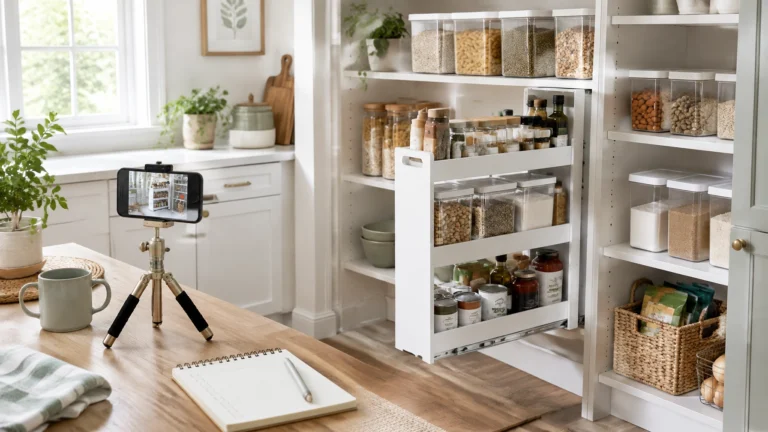
Clear bins work well when you need to see what you own. Use them for snacks, lunch supplies, condiments, produce, or breakfast items.
The Utopia Home refrigerator organizer bins include handles that make it easier to pull an entire category forward. Use one bin for yogurt and small breakfast items, one for produce, and one for sauces or condiments.
Avoid decanting every product simply because it looks attractive online. Decant only the foods you buy regularly and can refill consistently. Keep expiration dates visible or maintain a simple pantry-check routine once a week.
Give each bin one category. Do not create a “miscellaneous” bin that becomes a second junk drawer.

Make Closets Easier to Maintain
Closet organization should reduce decisions, not create more of them.
Group clothes by type first: tops, pants, dresses, activewear, and seasonal items. Then organize by color only if that helps you choose outfits faster.
Use slim hangers to reduce bulk. For vertical storage, consider Wonder Hanger space-saving hangers. They allow garments to hang vertically or horizontally and can help you use more of the space already available.
For off-season clothing, use a container with a clear window or transparent lid. The StorageWorks under-bed storage boxes make it easier to identify stored items without opening every container.
Label seasonal storage by category:
- Winter accessories.
- Guest bedding.
- Holiday décor.
- Summer clothing.
- Keepsakes.
Schedule a 10-minute seasonal swap instead of waiting until the closet becomes difficult to use.
Add Labels Only Where They Create Clarity
Labels are not decoration. They are instructions.
Label opaque bins, shared storage, backup supplies, and categories other household members need to understand. Skip labels on transparent containers when the contents are obvious.
Use clear language. Choose “Cleaning Backups” instead of a vague label such as “Home.” Choose “Lunch Supplies” instead of “Kitchen.”
A useful label answers one question: What belongs here?
Review labels every few months. If a bin repeatedly collects unrelated items, the category may be too broad or the storage location may be wrong.
Use Shoppable Videos Before You Buy
Photos show what a product looks like. Shoppable videos show how it behaves in a real routine.
Before buying an organizer, watch a demonstration that shows:
- The product’s dimensions.
- How it opens or slides.
- What fits inside.
- Whether it requires installation.
- How easily it can be cleaned.
- Whether the product solves your specific problem.
Avoid buying a product simply because it is trending. Build your shopping list by zone. For example:
- Under-sink system.
- Bathroom drawer system.
- Pantry snack system.
- Entryway drop zone.
- Seasonal closet storage.
Then buy only what fits the measurements and has a defined purpose.

Let a Curated Amazon Storefront Support the Routine
A curated storefront should make decisions easier. It should not become another endless product list.
An amazon storefront influencer can help by grouping products according to real problems: kitchen organization, small-space storage, drawer systems, cleaning tools, and everyday home solutions.
Browse Kimberly Millionaire’s Amazon storefront for product recommendations and demonstrations focused on practical solutions. The value of a curated storefront is context. See how a product is used, understand what problem it solves, and decide whether it fits your home before purchasing.
Use the same standard when creating your own shopping routine:
- Identify the problem.
- Measure the space.
- Watch the product demonstration.
- Read reviews for fit, durability, and cleaning requirements.
- Buy only what supports the system.
- Assign the product a home immediately.
Prices, availability, and product features can change, so verify current details before ordering. Consider recommendations carefully and choose what fits your household, budget, and routine.
Maintain the System With a Five-Minute Reset
Organization lasts when maintenance is easy.
At the end of the day, set a five-minute timer. Return misplaced items. Close open containers. Straighten one high-traffic surface. Put incoming products in their assigned homes.
Use a one-in, one-out rule for categories that overflow easily. When a new water bottle, sweater, kitchen gadget, or storage item enters the home, remove something that no longer serves you.
That small habit can help you avoid a larger weekend reset and reclaim approximately 30 minutes each week that would otherwise go toward searching, sorting, and reorganizing.
Start with one drawer today. Measure it. Remove the excess. Add the right divider or tray. Then record a short before-and-after video so you can see the improvement clearly.
Explore more practical product solutions through Kimberly Millionaire, and use the curated Amazon storefront to find organization products demonstrated in real-life routines. Build one system this week, make it easy to maintain, and let your home work more efficiently for you.