The Leftover Logistics System: A Pre-Meal Setup That Sends Thanksgiving Food Home Instead of Into the Trash
You have the turkey. The guest list is set. Now check the containers.
The hardest part of Thanksgiving cleanup often starts after the meal, when every counter is full, dishes are dirty, guests are heading out, and no matching lids are in sight. That is when good food gets left out, packed late, or forgotten behind a wall of unlabeled foil.
The scale is real. ReFED estimates that 320 million pounds of food (worth about $550 million, or roughly 267 million meals) are thrown away on Thanksgiving. More than 90% of hosts surveyed intentionally make extra food, and every host surveyed said they have leftovers. Yet only 45% send guests home with food, while 12% make no leftover plan at all. Turkey accounts for roughly 40% of what gets tossed; fruit and vegetables are the most commonly wasted category.
The problem is not laziness. It is timing, and container chaos. A drawer full of orphan lids can stop a send-home plan before it starts.
Build this simple system before guests arrive. Treat the times below as targets to test, not guarantees.
At a glance
- Container audit: 15 minutes
- Send-home station: 10 minutes
- Pack as you clear: Aim for about 15 minutes
- Day-after triage: Aim for 45 minutes Friday morning
1. Audit the containers before Thanksgiving week gets busy
Do this by Monday, November 23, not Thanksgiving morning. The most useful home organization ideas are the ones that solve the real bottleneck. Here, it is matching lids.

- Pull everything out. Put every container base on one side of the counter and every lid on the other.
- Match each base to a lid. Set aside anything without a partner. Recycle or otherwise clear out the orphans that have made the drawer hard to use.
- Count what works. Use two containers per guest as a planning target: one for savory food and one for dessert. A 10-person table means about 20 containers. If you have eight that actually match, you have found the weak link.
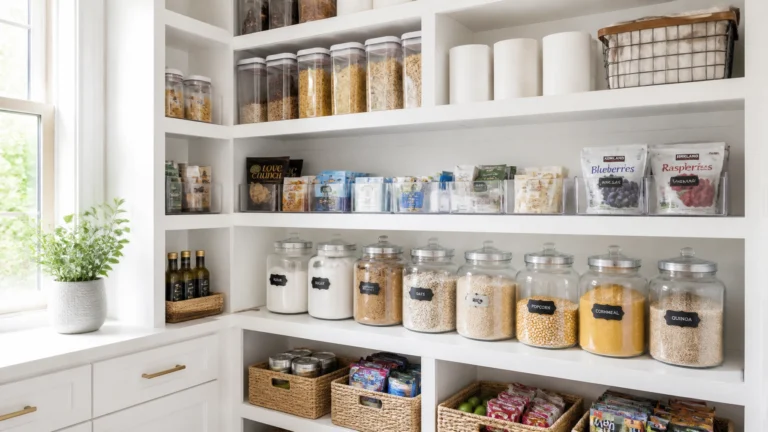
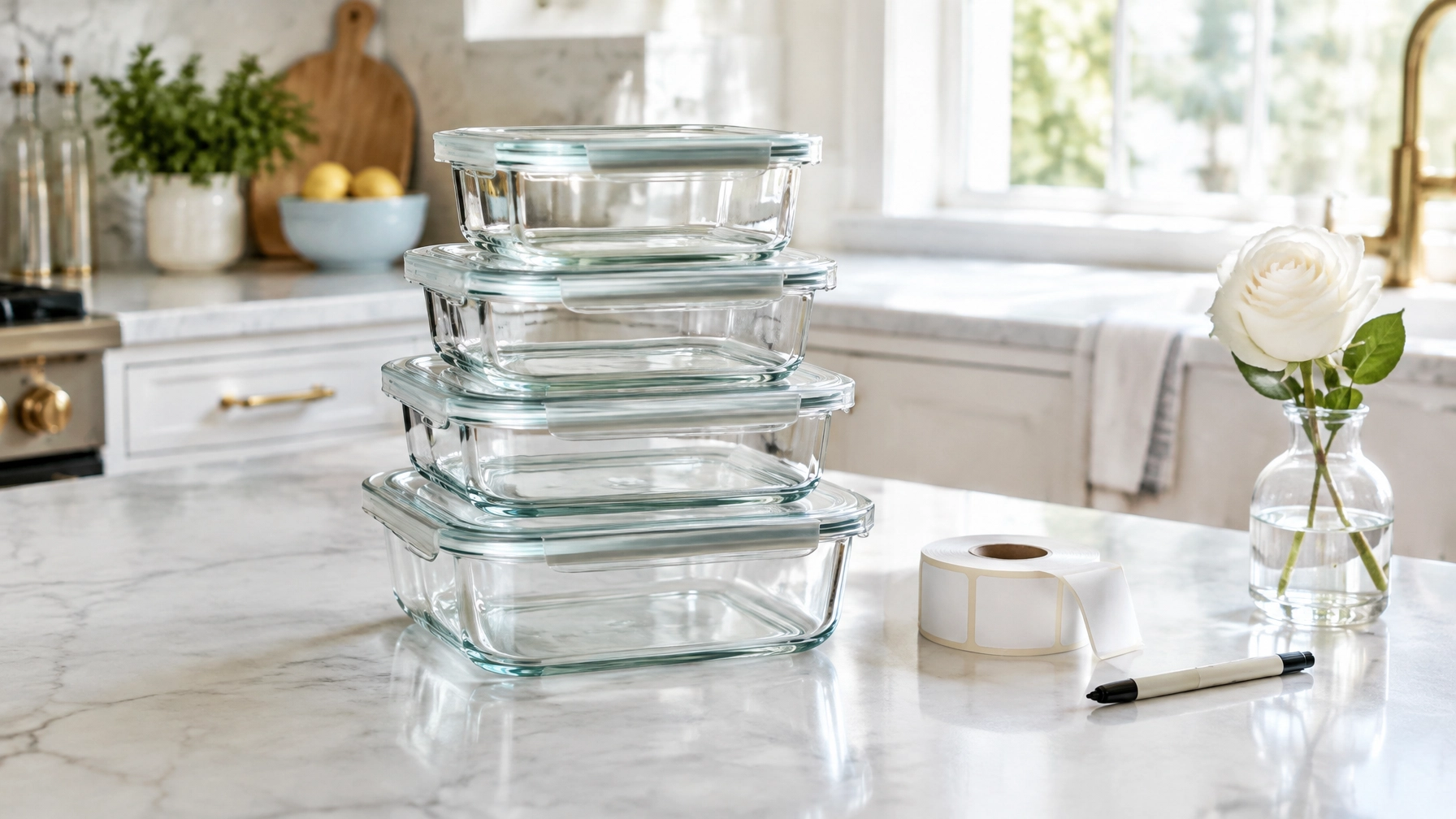
- Choose uniform sizing. Buy one uniform set instead of adding another assortment. Same footprint, one lid system: this is the highest-value idea in the whole setup. Matching containers make a neat fridge grid instead of a jigsaw, and you are not searching for a different lid for every base.
- Add the useful extras. Pick up a few divided containers so a guest can take turkey, stuffing, and a vegetable together, not three separate tubs. Add removable or dissolvable labels and a marker. A divided container is often what people want and rarely have. For a long drive, consider an insulated to-go bag or cooler; keep paper or kraft bags nearby.
A uniform set can cost more than a cheap stack of assorted pieces. But choose well and it can end the annual container purchase. Compare the set’s size and quantity with your guest count before buying.
2. Set up the send-home station in 10 minutes
Do this before guests arrive, while you still have a clear counter. Not during cleanup.
- Choose one counter near the door or dining room. Avoid the sink. Distance matters: a station beside the sink can become part of the dish pile within 20 minutes.
- Keep the supplies together. Stack containers and lids in one footprint. Add labels, marker, and bags. Set the cooler nearby if a guest needs it.
- Tape an index card to the stack. Write three reminders: the date, “refrigerate within two hours,” and what you plan to freeze. The note lets someone else pack while you manage another task.

3. Pack as you clear, not after the dishes pile up
The usual sequence is stack dishes, eat pie, then face the kitchen. It can mean handling each serving dish twice, and letting perishable food sit while you find containers.
Change the order. Aim for one pass, not a perfect time.
- Clear plates to the station. When the meal ends, carry serving dishes to the send-home station instead of parking them by the sink.
- Pack directly from each dish. Portion leftovers into containers. Put perishable food (such as turkey, gravy, and dairy- or cream-based sides) into the refrigerator promptly. Follow the USDA’s two-hour rule: refrigerate leftovers within two hours of cooking. If the room is above 90°F, the limit is one hour.
- Label by dish and date. Write “turkey: Nov. 26,” not a guest’s name. Dish labels make it clear what each container holds and help prevent food from becoming unclaimed.
- Match the container to the food. Save the largest container for gravy or other liquids. Use divided containers for complete plates.
- Split the work. Assign one person to the send-home station and another to dishes. Two people, two tracks. Keep large portions in shallow containers so they cool more readily.
This is the pass that can replace a scattered second round of handling. Results vary with guest count, fridge space, and how much you cooked. The goal is to move food while the kitchen still has a plan.
4. Triage the fridge on Friday morning
Set aside about 45 minutes on Friday, November 27. Do not wait until Sunday night, when containers are harder to identify and the fridge has become a guessing game.
- Make three counter groups: eat this week, freeze, and toss. Check each container before deciding.
- Use the USDA timeline. Most cooked leftovers keep three to four days in the refrigerator. Reheat leftovers to 165°F. Prioritize gravy and meat dishes for prompt use. Leftovers kept frozen at 0°F remain safe indefinitely, though quality fades over time, so label every bag with its contents and date.
- Handle the turkey. Remove meat from the carcass within the three-to-four-day window. Portion the meat. Simmer the carcass for stock that day or freeze it whole for later. The part nobody carved can become the part nobody remembers; ReFED estimates turkey makes up about 40% of Thanksgiving food waste.
- Freeze flat. Portion food into freezer-safe bags or containers, press bags flat, label with contents and date, then stack them like books. Flat freezing makes food easier to see and retrieve.
- Be selective. Dressed salads, custard pies, and fried foods are usually better eaten than frozen. A tidy freezer is not a reason to freeze food that will not be enjoyable later.
- Wash as you go. Use one sink of hot, soapy water. Avoid stacking dishes in the sink. The Friday reset is more manageable because the food was already packed on Thanksgiving night.

Track one number to see what worked
Count how many containers left the house. Count how much food went in the trash. That ratio is your score.
Try this system for one holiday, then adjust the container count to fit your household. Many hosts can shift from mostly discarded to mostly shared simply by doing the audit, but it depends on what was cooked, how many guests came, and how much refrigerator space you have. Skip the audit, and much of the benefit disappears: the plan stalls at the first missing lid.
If you share practical product demos, the container audit also makes a strong short video. Film the “before”, a drawer of orphan lids, and the “after”: a shelf of matched, labeled containers. Keep it under 15 seconds and post it as a shoppable video in the days after Thanksgiving, when people are back in their kitchens looking for solutions. An Amazon storefront influencer can point viewers to a curated container and label collection without turning the demonstration into a long product pitch. Browse Kimberly’s Amazon storefront for Amazon finds and organization picks.
Build the system before the kitchen gets busy. Start with the container audit, set the station, and make Thanksgiving leftovers easier to send home and store. Visit ktmillionaire.com and the Amazon storefront to explore more practical ways to make home routines work better.